Early Literacy
Why knowing the alphabet isn't enough
10 February 2026 · 4 min read
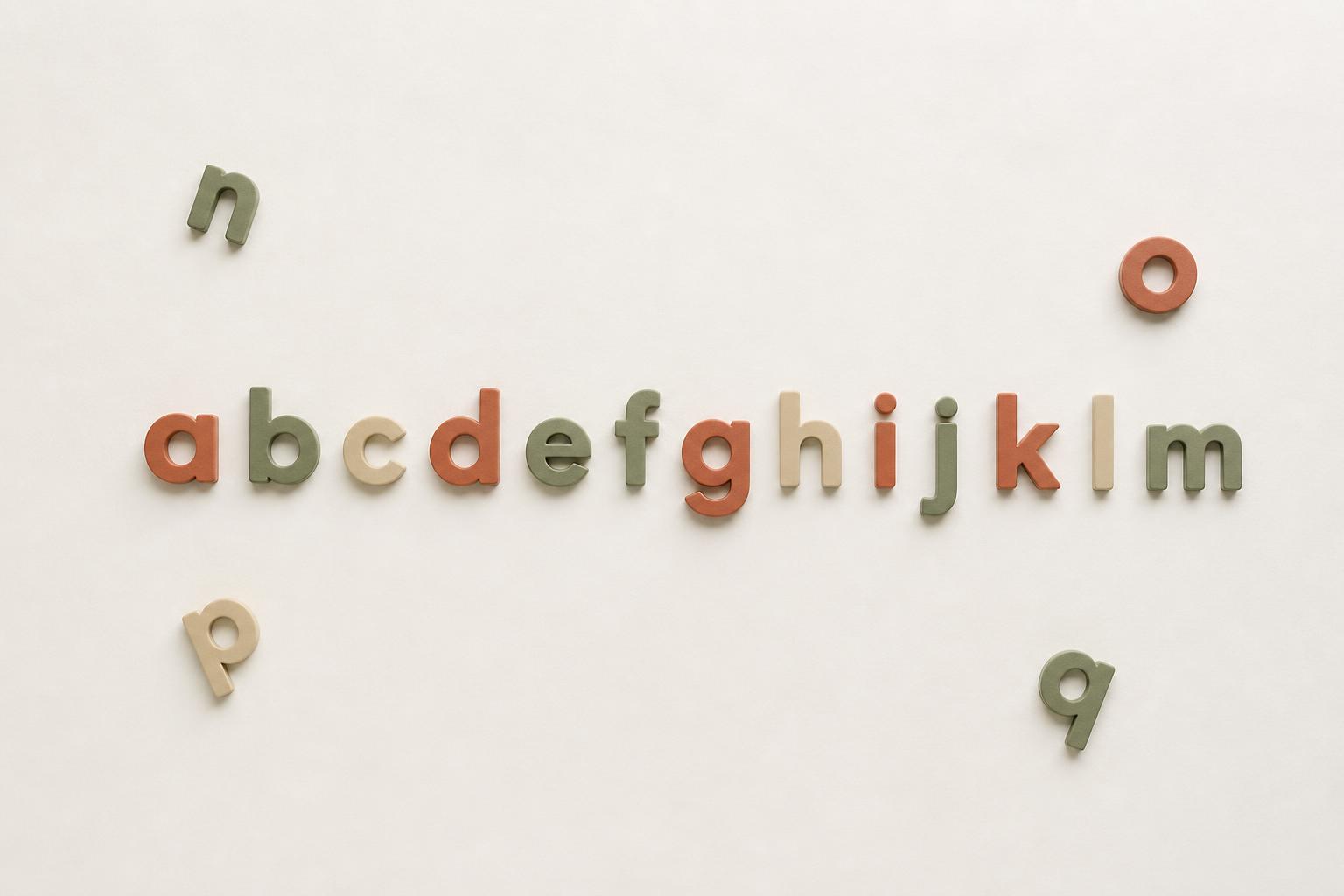
Letter knowledge is often the first thing we notice. A child names every letter on the fridge, sings the alphabet without hesitation, and points out the first letter of their name wherever they see it. It feels like reading is close.
Then a simple word appears on the page, and the confidence quietly disappears. Nothing has gone wrong. The child has simply reached the point where recognising letters is no longer the task.
Recognising is not the same as using
Naming a letter is a retrieval task: see a shape, recall a label. Reading a word is a construction task. The child has to hold several sounds in mind at once, keep them in order, blend them together and then check whether the result means anything.
- Recall the sound each letter can make, not only its name.
- Hold those sounds in sequence while moving left to right.
- Blend them into a whole rather than a string of parts.
- Ask whether the result is a word they already know.
Each of those steps is small. Together, for a young child, they are a lot to coordinate at the same time.

What this changes for us
It shifts our attention away from how many letters a child can name and toward what they can do with a few. A child who can confidently work with four sounds — moving them, changing them, hearing the difference — is often further along than one who can recite all 26.
The question worth asking is not 'how many letters?' but 'what can this child do with the ones they know?'
This is one of the observations that started PreKit. We're exploring how hands-on materials can make those in-between steps visible, so children can move, try, undo and try again rather than hold everything in their heads at once.